Your Duty of Care Doesn't End When the Wagon Leaves Site

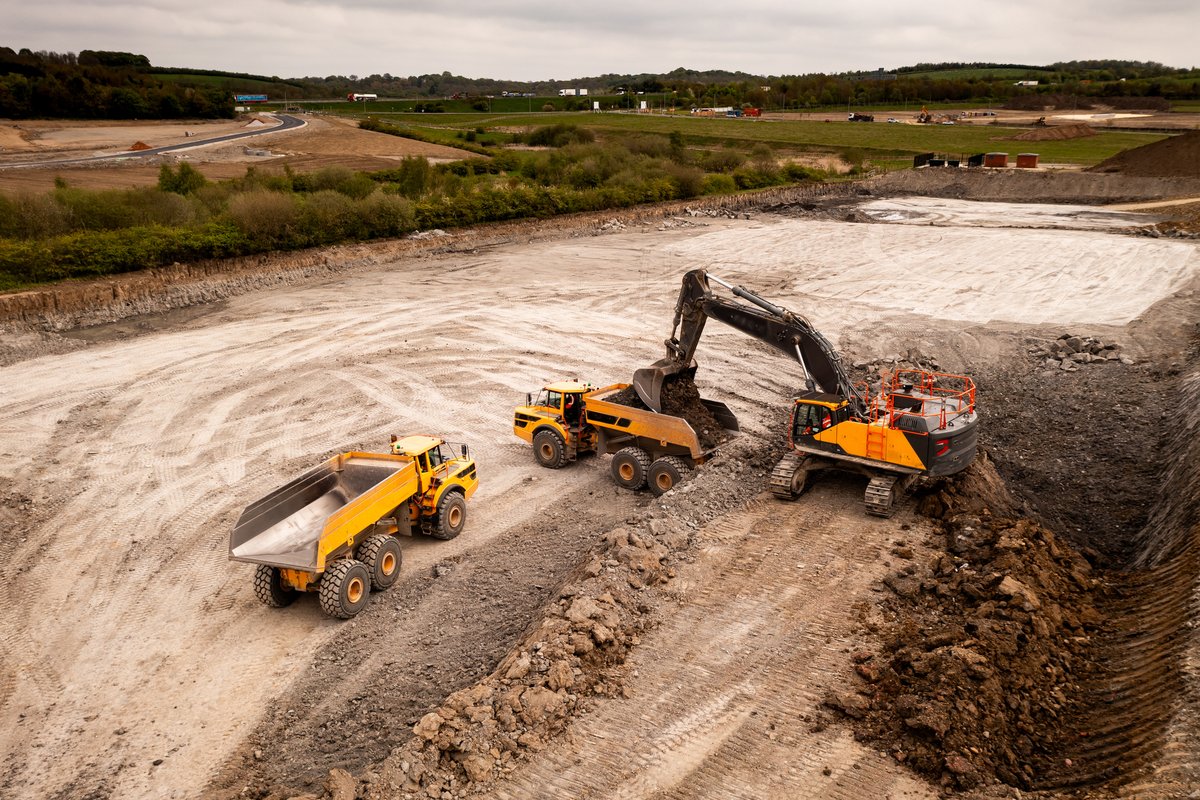
Ask most site teams what happens to construction waste once it's collected, and you'll get a shrug. That gap in understanding is about to get expensive.
Section 34 of the Environmental Protection Act 1990 has made waste producers responsible for their waste since 1990. Handling, transfer, disposal, all of it. Hand it to a carrier and the job isn't done. Duty of Care does not leave with the waste. If that waste ends up mishandled or at an unlicensed site, you can still face enforcement, even if you never knew. This isn't a new rule. What's changing is how visible the gaps become.
The rule, in three steps
Only use registered carriers. Checking takes minutes on the Environment Agency's, NRW's, SEPA's or NIEA's public register.
Describe the waste properly. “Mixed construction waste” doesn't cut it once anything classified is in the mix.
Keep the records. Two years for standard waste transfer notes, three years for hazardous.
Skip any of these and the law asks one question. Did you take reasonable steps? Without carrier checks, accurate descriptions and a clear trail, that's a hard question to answer well.
Why this sits in the boardroom, not just on site
Get it wrong and it's not just a fine, and that fine can be unlimited once a case reaches court. Directors can be personally liable too, where an offence happens with their knowledge or through neglect. Across dozens of sites and subcontractors, “we didn't know” has never been a defence.
What Digital Waste Tracking actually changes
From October 2026, permitted waste receiving sites, transfer stations, recycling facilities, landfill, must log every load digitally. That's real progress. For the first time, the destination end of your waste's journey creates a live, government visible record.
Worth knowing: carriers don't join the system until October 2027, and producer registration isn't mandatory at all yet. Peers were still pressing government on that exact gap as recently as June. So Digital Waste Tracking doesn't stitch together the whole chain from day one. Your own Duty of Care obligations, vetting the carrier, describing the waste, keeping records, haven't moved. They're still entirely on you.
What it does mean is this: any mismatch between what left your site and what shows up at the other end becomes visible to regulators in a way paper never allowed. If your record keeping has been good enough rather than genuinely robust, that's about to be tested.
Where Nexus Assurance fits
The biggest compliance risk in construction was never what you know about. It's what you don't. Most organisations have limited visibility of what their supply chain is actually doing once material leaves site. Who is carrying it. Where it is going. Whether the paperwork matches the movement. That blind spot is where exposure lives.
Nexus Assurance closes it. It captures the right proof at the point of movement, checks it against what was declared, and builds a clear, auditable record across every contractor, site and project. Built for Digital Waste Tracking from October 2026, it gives your team a compliance record that holds up when scrutiny arrives.
The goal isn't to eliminate risk. It's to manage it with confidence, so when someone does ask, the answer is already there.