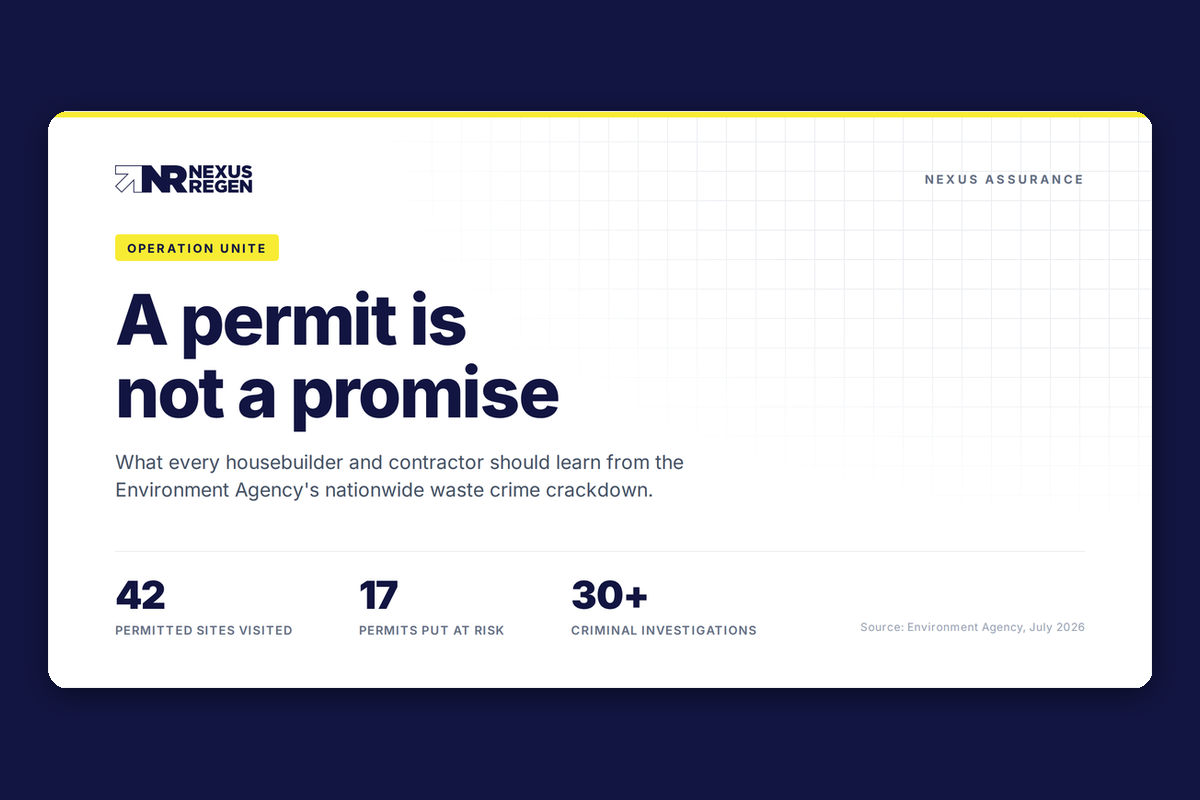
Digital Waste Tracking: What every construction business needs to know


If you work in construction (whether you're a waste facility, housebuilder, contractor, or haulier), a significant regulatory change is coming, and the deadline is closer than it might seem.
From October 2026, every permitted waste receiving site in England, Wales and Northern Ireland must log all waste movements through the Government's new Digital Waste Tracking (DWT) service. Paper waste transfer notes will no longer cut it. Scotland follows in January 2027. And by October 2027, the net widens to include waste carriers, brokers and dealers, meaning the entire construction supply chain will be in scope.
Here's what you need to know.
Why this matters for construction
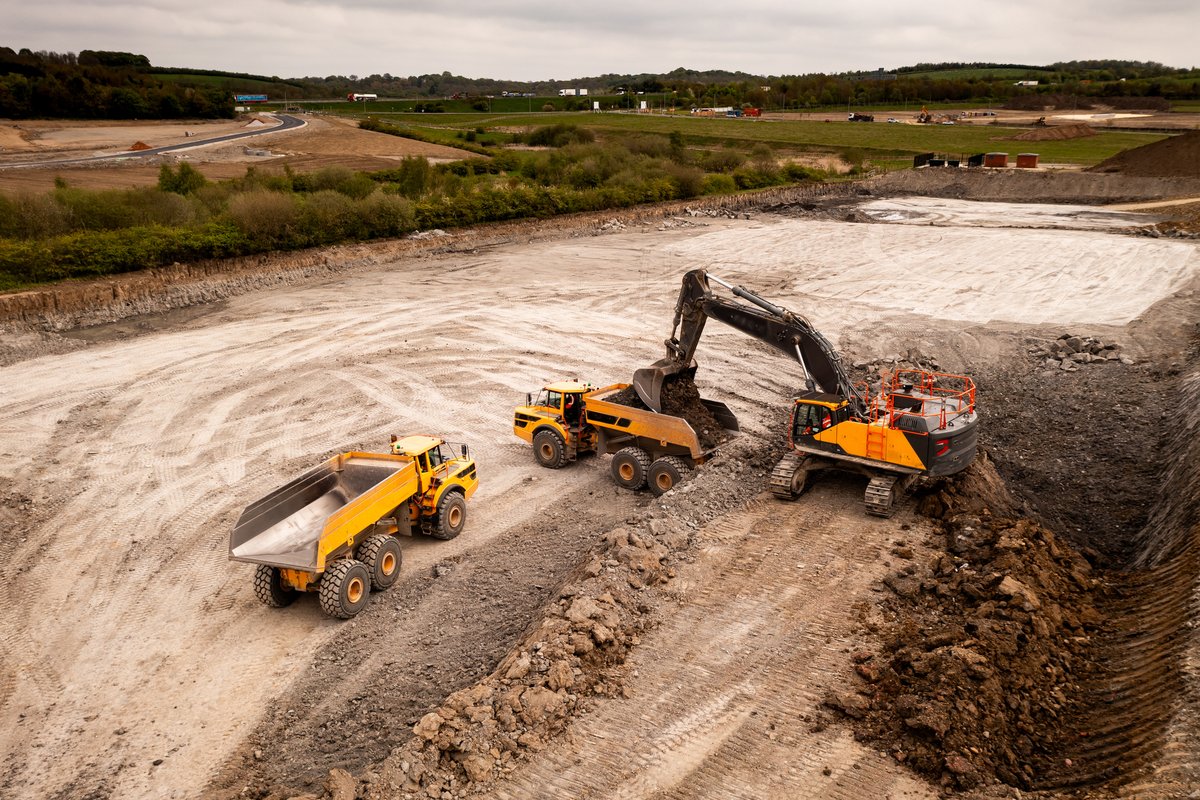
Construction isn't a minor player in the UK waste picture. The sector generates around 63 million tonnes of construction and demolition (C&D) waste in England every year, roughly 62% of all UK waste by weight. Despite high recovery rates, over 5 million tonnes still ends up in landfill annually.
That scale is exactly why DEFRA has construction firmly in its sights. Digital Waste Tracking was first signalled in the Government's Resources and Waste Strategy back in 2018 and given legal force through the Environment Act 2021. The goal is straightforward: replace a fragmented, paper-based system with a single digital platform that gives regulators a real-time picture of where waste is going and closes the loopholes that enable waste crime.
The timeline at a glance
Now → October 2026: Public beta open
The DWT service went into public beta on 28 April 2026. Permitted receiving sites can already start using it voluntarily. This is the preparation window.
October 2026: Phase 1 mandatory for waste receiving sites
All permitted and licensed waste receiving sites (transfer stations, recycling facilities, treatment sites) must use the digital service. Paper notes no longer satisfy legal requirements.
January 2027: Scotland goes mandatory
Scotland follows, aligned to its own legislative timeline.
October 2027: Phase 2 — mandatory for carriers, brokers and dealers
Waste carriers, brokers and dealers (including construction hauliers and demolition contractors arranging waste movements) must be on the system. This is the date that brings construction sites and their supply chains fully into scope.
What actually changes on the ground?
Under the new system, every waste transfer must be recorded digitally with a unique tracking ID. The required data includes: waste type and EWC (European Waste Catalogue) code, quantity and description of the material, origin and destination, and the identity of all parties (producer, carrier and receiver).
The system is API-enabled, meaning businesses already using compliant digital waste management software should be able to connect with relatively modest adaptation. Those still on paper, spreadsheets or legacy systems face the bigger lift.
For waste receiving sites and transfer stations: you're first. October 2026 is your deadline. If you're handling construction and demolition material, you'll need real-time intake logging: tonnages, waste codes, contamination assessments, end-use destinations. The Environment Agency has been clear that sites unable to demonstrate genuine recovery through documented records risk permit review.
For construction sites, housebuilders and demolition contractors: October 2027 is your formal deadline, but October 2026 affects you too. Every receiving site you send waste to will be logging your material from that point. If your carrier or subcontractor isn't registered and generating compliant digital records, that gap becomes visible, and the duty of care remains with the waste producer regardless of who dropped the ball.
For hauliers and waste carriers: Phase 2 is yours. From October 2027, every movement you arrange, or transport, must be tracked digitally. The private beta opens in autumn 2026, with a voluntary public beta in spring 2027. Starting early is strongly advisable.
The risk of getting it wrong
Non-compliance isn't just a paperwork issue.
Fines and prosecution. Failure to use the mandatory system from October 2026 creates direct liability under environmental legislation, including the Environmental Protection Act 1990. For operators, this can mean significant financial penalties.
Permit consequences. For waste operators, poor compliance ratings can trigger additional monitoring conditions or permit review, with direct operational consequences.
Reputational and ESG exposure. For listed housebuilders and major contractors, enforcement action surfaces in ESG due diligence by investors, mortgage lenders and planning authorities. Recent cases have seen a national housebuilder fined close to half a million pounds for failing to prevent river pollution, and a civils contractor fined over £160,000 for contaminated runoff. Both are illustrations of how environmental compliance failures translate directly into financial and reputational damage.
And critically: for the first time, regulators will have a real-time data picture of waste flows. Inconsistencies between declared tonnages, carrier records and receiving site intake data will be immediately visible to the Environment Agency. The audit trail is no longer retrospective.
The commercial case for acting now
Here's what often gets missed in compliance discussions: the data this system generates has genuine commercial value.
The UK construction industry uses 400 million tonnes of natural resources annually. End-to-end digital visibility of waste flows gives businesses the data to identify inefficiencies, improve procurement, and increase the proportion of materials diverted to secondary markets rather than landfill. At current landfill tax rates, every tonne diverted is measurable cost avoidance.
For companies with ESG reporting obligations, auditable waste data is becoming a differentiator, not just a compliance cost. Housebuilders already compete on sustainability credentials with planning departments; digital waste data feeds directly into that.
There's also a supply chain integrity argument. One of DEFRA's primary drivers is tackling waste crime: illegal dumping, deliberate misclassification of hazardous material, unlicensed exports. For major contractors, using a carrier that later proves to be unlicensed creates duty of care liability even where there was no deliberate wrongdoing. A clean, verified digital chain of custody significantly reduces that exposure.
What to do now
Whether your deadline is October 2026 or October 2027, waiting is the wrong strategy. Here's where to start:
- If you operate a permitted receiving site: you should be in the public beta now. The mandatory deadline is months away, not years.
- If you're a housebuilder or contractor: audit your carriers and subcontractors. Are they registered? Can they generate compliant digital records? Their compliance is your compliance risk.
- If you're a haulier or carrier: Phase 2 private beta opens in autumn 2026. Use that window. October 2027 will arrive faster than April 2027 did.
- Everyone: check whether your existing waste management software connects to the Government's DWT API. If it doesn't, now is the time to find out.
A structural change, not a one-off deadline
Digital Waste Tracking is not a compliance box to tick and move on from. It's the foundation of a fundamentally different regime, one in which waste flows are transparent, auditable and directly visible to regulators. For construction, responsible for the majority of waste generated in the UK, the implications run deep.
The businesses that treat this as an opportunity to build genuine waste intelligence into their operations, rather than scrambling to meet each successive deadline, will be better placed on compliance costs, ESG capital access, planning relationships, and supply chain credibility.
At Nexus ReGen, we're built for exactly this environment. Our platform connects construction and housebuilding organisations with the tools to manage, trade and report on heavy construction materials in a way that's compliant, commercially efficient and aligned with the circular economy. We’ve built Nexus Assurance exactly for the upcoming changes.
Want to understand how Nexus ReGen can support your digital waste readiness? Visit nexusregen.com or get in touch.