


Contact Us
5 Hazelgrove Road,
Haywards Heath,
England, RH16 3PH
Get Connected
- [email protected]
- 01293 222 622
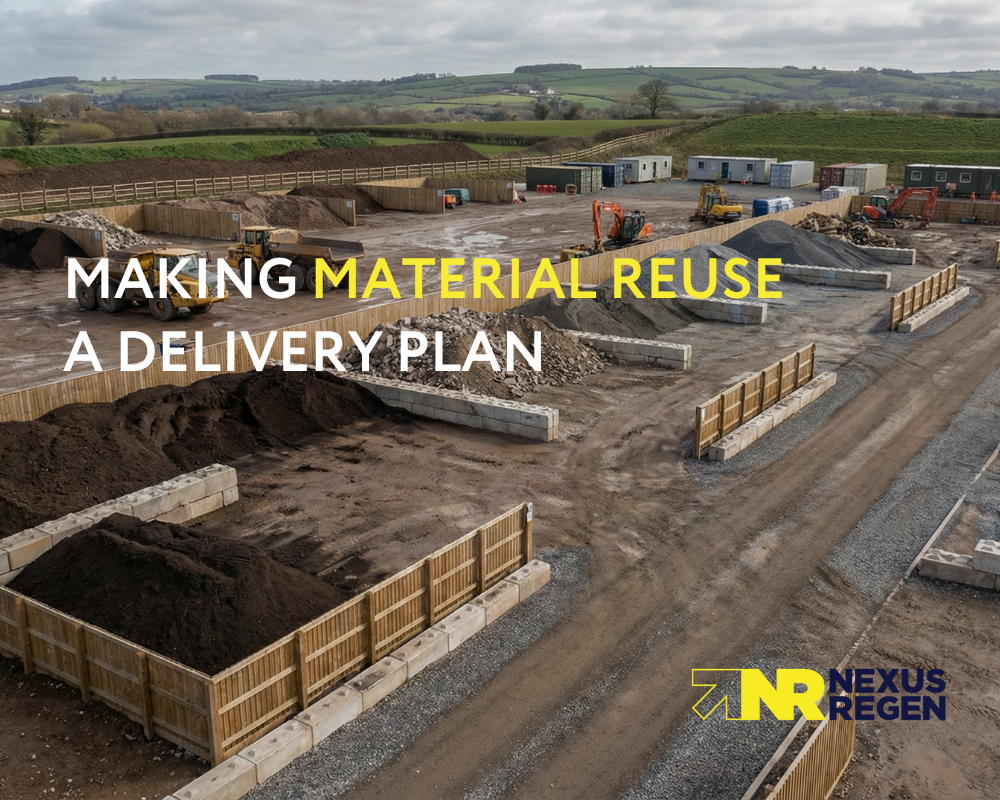
Circular construction is no longer something that sits in a sustainability section at the back of a tender. In 2026, it is turning into a delivery discipline, especially for heavy materials like soil, aggregates, concrete arisings, and planings.
The biggest change is mindset: project teams are starting to treat surplus material as a planned supply stream, not just “muck away” that needs to be dealt with. When that shift happens early enough, circularity stops being a scramble and becomes a set of normal decisions: what we can reuse on site, what we can move locally, what we should process, and what genuinely has to be disposed of.
On busy programmes, circularity succeeds when it is designed into the job:
This is why “materials movement” has become a talking point. It captures what is really happening: circularity is not only about waste. It is about how quickly and safely the industry can move usable material to the next place it is needed.
The pressure is also coming from basic delivery realities. Landfill costs and constraints, material price volatility, and haulage availability mean the old default (dispose and replace) can be expensive and slow. Reuse, when it is organised properly, often reduces risk rather than increasing it.
In summary, what makes circularity work at scale is coordination: matching supply and demand, tracking timing, and keeping evidence in one place. Nexus ReGen exists to make that coordination simpler for soil and aggregates, so circular outcomes can be delivered without adding admin to site teams.
In 2026, circularity is becoming mainstream because it helps projects deliver. The organisations that win will be the ones that make reuse simple, repeatable, and fast.
5 Hazelgrove Road,
Haywards Heath,
England, RH16 3PH